Langzeit Skandale rund um IT hat auch Albanien, gerade um Polizei Computer hat Albanien. Nachdem man NATO Geheimnisse verkaufte, wurde der Zugang zu NATO Computern gesperrt, Was schon unter Berisha, Ilir Meta war..
Die Amerikaner haben doch selbst die MEK Terroristen ins Land geholt, bei der Manza abgesiedelt und ausgebildete Hacker.
Samstag, 16. August 2025
Einreise, Ausreise Daten, werden gefälscht, manpuliert, ein uraltes Albaner Polizei Problem auch schon 2009, wenn die TIMS Daten des Polizei Computers gefälscht werden. Führt direkt zu Top Betrugs Skandeln rund um Energie, KfW, Aussenministern, die Partner der Steinmeier - Ilir Meta Gang waren.
Die Frau wurde wie etliche Innenminister in Albanien schon 2024 gefeuert.

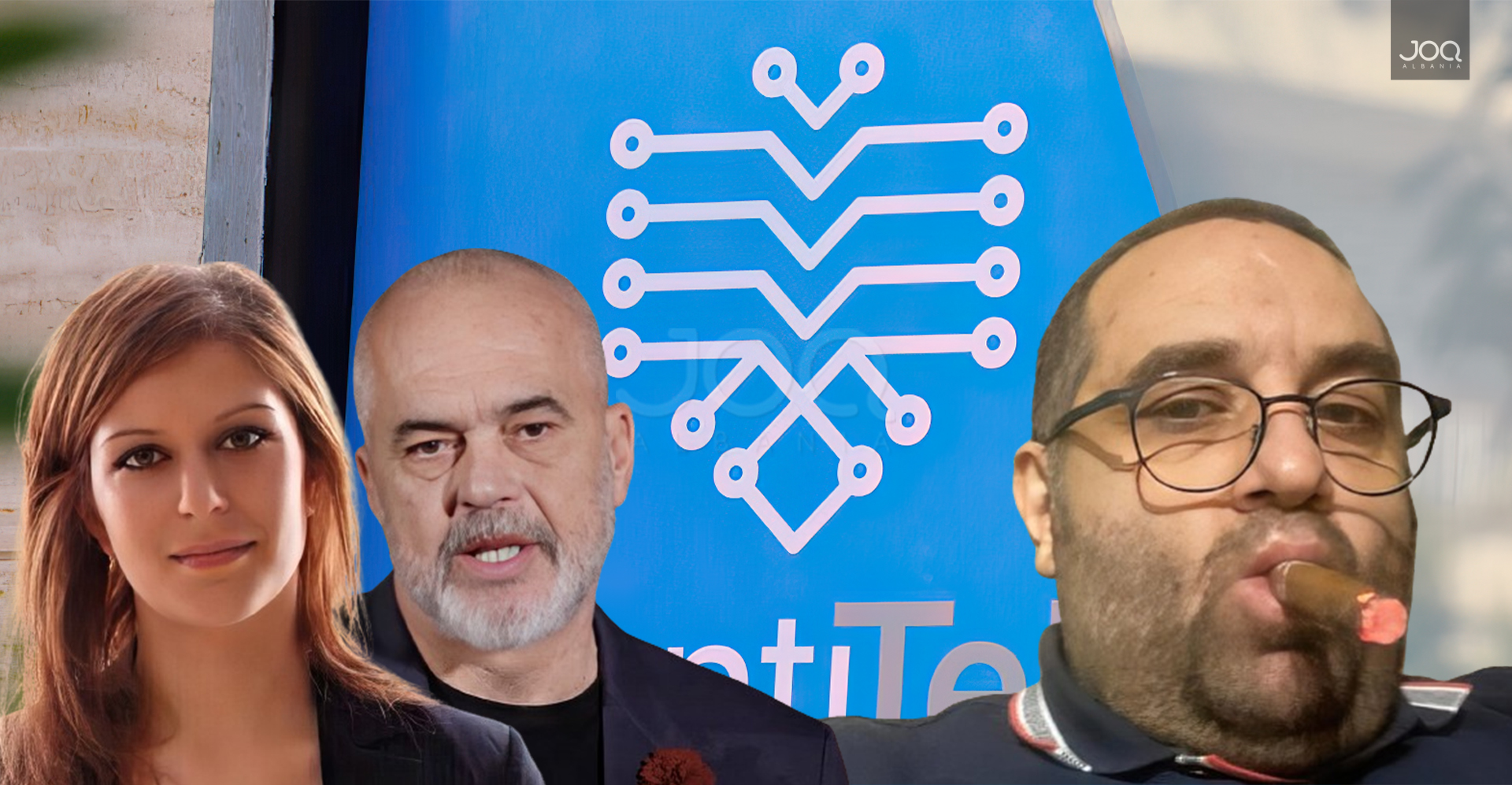
Loina Prifti e IDENTITEK i jep tender pa garë djalit të Aleksandër Meksit
https://joq-albania.com/artikull/1194315.html
‘Failure in Prevention’: Iran-Linked Hackers, Stolen Albanian Data and an FBI Sting
Information about the attempted crime emerged via a federal lawsuit filed in the US District Court of Maryland in March 2025. According to the lawsuit, the hackers offered to sell the FBI agent a database containing national ID numbers, names, birth dates, addresses and other personal details of Albanian citizens.
“This information exposed sensitive personally identifiable information of Albanian citizens, which could be used for identity theft,” the court filing states.
BIRN contacted Albania’s National Cyber Security Authority for comment about the claims made in the Maryland court filing, did not respond by the time of publication.
The incident has again raised issues of cybersecurity in Albania, which were exacerbated in March this year by revelations about cyberattacks on parliament and on Albanian Post. Both attacks were claimed by the allegedly Iran-linked Homeland Justice group, which has targeted Albania several times over the past few years.
The Homeland Justice group has been linked by US authorities and Microsoft to hackers believed to be based in Iran, and it became widely known for a series of cyberattacks against Albania’s digital infrastructure in 2022. These attacks resulted in the publication of databases containing information from state institutions, public officials and ordinary citizens.
Cybersecurity experts warn that the exposure of this data poses long-term risks for the public.
“Let’s call it what it is – there was a failure in prevention. Cyberattacks do not come out of nowhere; they target systems where vulnerabilities have existed for a long time,” Besmir Semanaj, a cybersecurity expert, told BIRN.
He explained that data circulating on illegal markets can be exploited for identity theft, financial scams, the creation of fake accounts, or even blackmail against individuals.
“Once data is leaked and enters the market, it never truly disappears – it keeps being reused,” he said.
The public filing in the Maryland court further suggested that, according to certain cybersecurity sources, the Homeland Justice hacker group is part of the same network as Handala Hack, an allegedly Iranian-linked hacker group that has targeted the US and Israel, and another hacker group called Karma Below.
According to the lawsuit, these groups are allegedly controlled by the same individuals connected to Iran’s Ministry of Intelligence and Security, MOIS.
Last month, the US Justice Department also announced the seizure of four domains that it said were linked to MOIS-backed groups: Handala-Hack.to, Karmabelow80.org, Justicehomeland.org and Handala-Redwanted.to.
The US Justice Department said “MOIS actors” used the Justicehomeland.org domain to claim responsibility for stealing sensitive documents from Albanian government organisations in 2022. “The motivation for leaking this information appears to be the Albanian government’s decision to support an Iranian dissident group called Mujahedeen e-Khalq or ‘MEK’. MEK has, in the past, openly advocated for the overthrow of the Iranian government,” it said.
2018
Over 2,000 members of Mujahedin-e-Khalq [People’s Mujahedin of Iran], an exiled Iranian dissident group, live at a compound in Manaz in Albania. As a consequence, Albania’s authorities have a troubled relationship with Iran. In September 2022, Iranian embassy staff in Tirana were expelled over the Homeland Justice cyberattacks.
Are the ‘Iranian hackers’ really Iranian?

Albanian police enter the Iranian embassy in Tirana amid a
diplomatic row sparked by a previous hacker attack by the Homeland
Justice group in 2022. Photo: LSA.
However, some Albanian IT experts remain cautious about claims regarding Homeland Justice’s origins and the group’s alleged ties to Iran.
Erion Demiri, an IT specialist, told BIRN that he does not consider Homeland Justice to be linked to Iranian hacktivist collectives such as Handala Hack.
“In principle, I do not think this group is Iranian,” Demiri asserted. He said he believes that Homeland Justice is “a ‘group’ focused solely on Albania and has no history of any other activity”.
However, regardless of who is behind the attacks, the cybersecurity weaknesses in Albanian state systems are a real and ongoing problem, Demiri warned.
“Damage assessment from these attacks has not been carried out,” he said.
“One thing that should have been done, once identity card data appeared on the market, was to reissue them with new card numbers and new personal identification numbers, but that would involve a very high cost,” he added.
Semanaj also stressed that even several years after the breaches, preventive and protective measures remain essential. “The fact that the data is still in circulation means the risk is still present,” he said.
“Institutions need to move from post-attack reaction to active defence, which means continuous monitoring, warning citizens, strengthening authentication and controlling access to systems,” he added.
Cybersecurity protection is an ongoing process, not a one-time response after an attack, Semanaj cautioned.
“The response came only after the damage had already been done. In these cases, it is not only systems that are compromised; public trust is severely damaged, and that is much harder to restore,” he said.
Die MEK Terroristen in Tirana - Albanien, organisieren und finanzieren die Randale im Iran

Die Lobby Gangster Truppe, inklusive Wesley Clark, Tom Ridge. Bolton usw..der Mafia Vertreter:
Albanische Experten und Medien warnen vor der US finanzierten Terror Organisation MEK in Albanien
Albanien
METAMORPHOSIS: Vom Iran nach Albanien oder wie man aus einer Terrorgruppe eine prodemokratische Organisation macht (mit US-Unterstützung)


 Posts
Posts


Keine Kommentare:
Kommentar veröffentlichen