Montenegro, wo Nichts weiter ging in den letzten 10 Jahren, keine Justiz funktioniert, nur die Mafiösen Umtriebe des Stanja, Dukanovic Clans und vieler seiner kriminellen Partner. Nun will man mit Geld die Mitgliedschaft kaufen im alten US Modell wie von Podesta, oder Frank Wisner krimineller Betrugs Organisation Patton Boogs He is a paid lobbyist for the country of Georgia and was 2008 Presidential candidateJohn McCain's foreign-policy aide.
On April 17, 2008, McCain spoke on the phone with Georgia President Mikheil Saakashvili about the situation in South Ossetia and Abkhazia, two troubled provinces 07 Apr 15 Montenegro Hires Orion to Push NATO Case
Montenegro has signed up the firm Orion Strategies to lobby decision-makers in the US over its stalled NATO membership bid.
Dusica Tomovic
BIRN
Podgorica
Montenegro has agreed a contract with the
Washingron-based firm Orion Strategies for it to advocate Montenegro's
NATO membership bid, according to a US Department of Justice filing.
The
firm will provide strategic communications, PR, and advocacy around
issues and news relating to Montenegro in the US and Europe and the
country's bid for membership of the alliance.
Orion Strategies will received $150,000 for services delivered over the 12-month period ending on February 1, 2016.
The
government in Podgorica sees 2015 as crucial year after its bid to join
NATO received a setback last September at the summit in Wales.
Alliance members then decided against inviting the country to join, saying they would reconsider Montenegro’s case in 2015.
Documents
filed last week by Orion Strategies with the Foreign Agents
Registration Unit of the US Justice Department, reported that the fim
will provide Montenegro with counseling services, guidelines and support
to strategic communications, public relations and backing before US
decision-makers.
"Orion Strategies will also advise Montenegro's
government in approaching key policy figures in the US executive, with
the focus on the State Department and White House," the contract
provides.
The firm was founded and led by Randy Scheunemann, who
served as a senior foreign policy adviser to Republican politician John
McCain in his 2008 US presidential bid.
Macedonia, Latvia,
Romania and Taiwan are among the other countries for whom Orion has
provided lobbying services in recent years.
NATO remains a controversial issue in Montenegro on account of the
alliance's role in kicking Serbian forces out of the former Serbian
province of Kosovo in 1999.
The mainly Albanian ex-province declared independence in 2008 and
ethnic Serbs - and others - in Montenegro remain resentful of NATO's
role in the conflict. http://www.balkaninsight.com/en/
In mid-July 2008, The Sunday Times linked Scheunemann to Stephen Payne, a lobbyist covertly filmed as he discussed a lobbying contract and offered to arrange meetings with Vice President Dick Cheney, Secretary of State Condoleezza Rice, and others, and recommended donations to the George W. Bush Presidential Library. Payne said Scheunemann had been "working with me on my payroll for five of the last eight years." [12]
Als erstes Investment gab es Spiel Casino Automaten und Zweigstellen der Bordell Besitzer im Balkan vor über 20 Jahren. Inklusive Lotto entwickelten die Österreicher nur ein Verbrecher Imperium mit lokalen Mafia Bossen rund um Glücks Spiele.
Rade Rakonjac, Arkan's murdered former bodyguard
By Stevan Dojčinović , Bojana Jovanović
Rade Rakonjac, 52, the former bodyguard of Željko “Arkan” Ražnatović,
was killed Wednesday at noon as he sat with two friends in a Belgrade
cafe.
Two gunmen shot Rakonjac five times in the neck and chest, and he
died en route to the Military Medical Academy hospital. With Rakonjac at
the Marikicafe were Stojan Novaković, 58, who was wounded, and former
BC Beograd and BC Partizan basketball player Goran Ristanović, 57.
According to eyewitness statements, the assailants fled in an Alfa
Romeo. Fifteen minutes later, the car was set ablaze in the Voždovac
neighborhood of Belgrade.
In addition to Arkan, Rakonjac had another important link in the
underworld – he was close to the notorious Serbian criminal and former
Zemun clan leader Luka Bojović.
Rakonjac and Bojović knew each other from the early 1990s, when both
were members of Arkan's Serbian Volunteer Guard. Following Arkan’s
murder in 2000, the two continued to collaborate. In a police chart obtained
by the Organized Crime and Corruption Reporting Project (OCCRP) and the
Center for Investigative Journalism in Serbia (CINS) Rakonjac is listed
as an important collaborator in Bojović's group. According to the
chart, Rakonjac was subordinate to Milos “Pižon” Petrović and Vladimir
Mijanović, who both answered directly to Bojović. Mijanović was arrested
alongside Bojović in February 2012 while having dinner at a restaurant
in the Spanish city of Valencia.
In 2005, Bojović and Rakonjac were tried for beating Mirko Elezović
in 2002 in the Belgrade Zoo and robbing him of €7,200 (US$ 9,800).
Belgrade courts dismissed the charges.
According to the Special Prosecutor's Office, Bojović took over the
Zemun clan after its leaders, Dušan Spasojević and Mile Luković, were
killed in the 2003 police operation dubbed “Saber,” which was a response
to the assassination of Serbian Prime Minister Zoran Đinđić.
Former Zemun clan leader Luka Bojović
Bojović is currently in jail in Spain, and Serbian prosecutors have
accused him of organizing the murder of three local criminals.
Bojović’s former associate, Sretko Kalinić, testified that Bojović tried to kill Andrija Drašković as revenge for the murder of Arkan.
A few years ago, Bojović came into conflict with Slobodan Šaranović
and his associates and there were killings on both sides. Prosecutors
say Šaranović ordered the murder of Nikola Bojović, the brother of Luka
Bojović, because he thought that Luka Bojović ordered the murder of his
own brother, Branislav, a long-time powerful member of the Serbian
underworld.
Šaranović was arrested in Montenegro for this murder, but released
from custody after the Montenegrin court refused to extradite him to
Serbia. Read more about it in the article “Montenegro: Court Bars Extradition In Murder Case.”
Serbian media have speculated that Rakonjac was a victim of these
conflicts, but police have yet to report clear evidence of a connection.
View Luka Bojović’s profile, put together by the OCCRP and CINS for a more in-depth look. Serbia: Crime Figure Linked to Trade Group
Mirjana Acimovic, the head of Jakta and associate of Andrija Drašković. (photo: facebook)
By Stevan Dojcinovic and Jelena Vasic (CINS)
The chairwoman of Serbia’s influential gambling trade association has
been an employee and director for businesses owned by Serbian crime
figure Andrija Draskovic for at least the past 17 years.
Jakta, the trade group, has been aggressively working with government
officials to shape gaming laws, train law enforcement officials and
regulators and lobby local, regional and European governments. It has
set itself up as not only a group of Serbian experts but a regional
player in influencing everything related to casinos and gambling.
Mirjana Acimovic, 51, is president of the Belgrade-based Jakta (from
the Latin word for “roll”, as in dice). She worked for Draskovic as far
back as 1997, when he appointed her director of his company Fun d.o.o (later renamed DLM AT Holding Group) that owned two casinos and the popular downtown Havana nightclub, among others.
Draskovic is listed as the owner of Maestral Nautika d.o.o,
an active trading company in Croatia, where Acimovic currently serves
as director although the company has not filed any paperwork since 2008.
Acimovic said in an interview with reporters from the Center for
Investigative Reporting in Serbia (CINS) and the Organized Crime and
Corruption Reporting Project (OCCRP) that she no longer works with
Draskovic and sees no problem with the relationship. She has had coffee
with him once in 15 months, she said.
Austrian headquarters of Novomatic, one of Europe’s biggest gaming companies. Its Serbian branches are members of Jakta.
“My relationship back then with him was just professional. The man
was in prison until recently and we saw each other once after he got
out,” she said. “That was a private meeting and that’s irrelevant.”
Serbian authorities who worked with Jakta were asked if they were
aware of the connection between Acimovic and Draskovic but none would
answer specific questions.
According to the Jakta website, the organization represents 38
companies that own slot clubs, produce gambling machines or maintain
them. The association is involved in writing laws with the Tax
Administration, lobbying state institutions for favorable laws, helping
companies get gaming permits and helping gambling addicts get treatment................ https://occrp.org/occrp/index.php/en/ccwatch/cc-watch-indepth/2323-serbia-crime-figure-linked-to-trade-group
According to documents OCCRP/CINS obtained from the Ministry of Labor,
Jakta’s membership has included Fil-Sar and Lutrija Filnik, companies
controlled respectively by Montenegrin crime boss Brano Saranovic before
his death in 2009 and his brother, Slobodan, who was arrested last year
in connection with a murder of Luka Bojovic’s brother.
Trying to climb the ladder in Europe
Ivan Tasovac, Minister of Culture, helped Jakta by passing the organization’s recommendations on to other ministries.
Acimovic has also been appointed chairwoman of the Responsible Gaming
Committee in Euromat, the European Gaming and Amusement Federation that
represents the industry at the EU level.
Das Albanische Politiker nur Vertreter von kriminellen Clans sind, oft sogar wie in Albanien und im Kosovo Vorbestrafte, auch wegen Mord Verurteilte wie Daut Haradinaj, hat nun zu einer Liste geführt, welche Politiker in kriminelle Aktivitäten verwickelt sind. 1.000 Gestalten stehen auf der US Einreise Verbots Liste, nur die EU gewährt noch Freie Fahrt für Kriminelle. Man wird sehen wie es weiter geht im Lande ohne jede Justiz!
Oft sind die Polizei und Justiz Bringer selbst kriminelle Enterprise, wie die EULEX Skandale zeigen, ebenso das Versagen der EU und Deutschen Missionen überall in der Welt auch in der Ukraine.Der Interpol Vertreter, wurde kurz verhaftet, weil er Interpol Suchen durch Buchstaben Änderungen im Sinne der Super Mafia manipulierte. Der Interpol Chef, war aus einer extrem kriminellen Familie, direkt mit Salih Berisha verwandt. Der Kosovo, Al-Kaidas neues Zuhause mit den Saudi Terroristen und Yassin Kadi und Prinz Bandar wie immer
SManalysis
Zgjedhjet Administrative rrezikojne te mos zhvillohen, shkak
inkriminalizimi i politikes dhe i institucioneve te pavarura shqiptare,
process qe behet gjithnje akoma dhe me i veshtire
Duket se lobingu i Berishes ne Washington dhe BE, ka kapur ne befasi dhe ka
bindur perendimin qe nga Parlamenti dhe me poshte, politika dhe
institucionet shqiptare, duhet te reformohen me qytetare pa rekorde
kriminale..
Raporti “Top Secret” i BE: Ne PS ka 9 Deputete me rekorde kriminale, PD 4,
LSI 6, PDIU 4, PR 2
Por deri ne Zgjedhjet e Tetorit, do te kerkonin nje qeveri gjithe
p... mehr »
Seit Jahren bekannt, das das INterpol Büro durch Kriminelle kontrolliert wird, wie praktisch alle Institutionen im Albaner Raum. Deshalb gibt es keine Gerichts Verfahren, niemand nimmt Verhaftungen vor, ignoriert die Auslieferungs Abkommen und gesuchte Mörder werden Abgeordnete, weil man neue Identitäten kauft, der inzwischen abgesetzte Interpol Chef, falsche Namen, falsche Geburtsorte dann zur Fahndung ausschreiben.
Artan Bajraktari, direkter Verwandter des Capo der Albaner Mafia: Salih Berisha wie Stratfor festhielt. Die Familie ist auch direkter Financier des Gangsters US Senator Eliot Engel.
Unter dem richtigen Namen, wurde 1999 und 2004 Besnik Morina aus
Gjakova im Kosovo aka Mark Frroku (neue Identität in Albanien) in
Belgien rund um Mord Ermittlungen festgenommen, kam aber lt. der damaligen Anwältin frei,
ohne Kaution und floh dann nach Albanien, wo man sich im kriminellen
Enterprise des Salih Berisha, Innenminister Bujar Nishani, eine neue
Identität kaufte, was normal ist. Der Gangster Mark Frroku, sitzt in Haft, nachdem heute das Albanische Parlament erneut seine Immunität weggenommen hatte, ebenso wird wegen falscher Vermögens Erklärung und Geldwäsche auch rund um Frauen Handel ermittelt. Die Mafia Universität "Vitrina" wurde ebenso der Bande vor Monaten geschlossen, welche nur Diplome verkaufte.
Der Chef von Interpol in Tirana, der US Albanische Gangster: Artan
Bajraktari, der Interpol Operator Chef: Laureta Alla hat Dokumente
gefälscht, Verhaftungen der Frroku Brüder verboten, und jede Verhaftung verhindert. Arben Frroku und Fotos mit der Top Albanischen Polizei Direktion sind eine Legende.
Ein schwerer Bruch der Internationalen Vereinbarungen
Lulzim Basha nannte eine Strasse in Tirana um in 2012 ( im Kombinat), einem Bruder des Mark und Arben Frroku, was auf enorme Parteibuch Spenden hinweist, der Verbrecher Familie.
Two high-rank Interpol officials were held by the Internal Service and Complaints.
Die US – Albanische Mafia, hat das Interpol Büro in Tirana unterwandert, mit Artan Bajraktari und Laureta Alla
Mindestens 2 Polizei Direktoren, direkte Berisha Verwandte, darunter auch Artan Bajraktari,
hatten erneut Schiessereien auf unbewaffnete Zivilisten, Studenten,
oder rund um einen Park Platz begonnen, Leibwächter schossen schon mal
auf Kellner, wie ebenso bekannt ist.
Albanian organised crime has reached the United States,
creating partnerships with the Gambino, Genovese, and Luchese families
to facilitate specific crimes……………….. Setimes
Es kann nicht verwundern, das die Amerikaner umgehend und sofort das
von den Italienern aufgebaute Interpol Büro sabotieren und an die
US-Albaner Mafia verkauften, wo die NATO Website setimes vor über 10
Jahren warnte und das FBI, das die US Albanische Mafia, mit dem Gambino, Genovese, und Luchese Clan die grösste Gefahr für Europadarstellt.. Beide höchste Interpol Beamte in Tirana sollen sogar verhaftet woren sein, wie Medien berichten.
Der Polizei Direktoren Mörder,
gesuchte Gangster Arben Frroku, direkt neben Agron Kulicaj, dem
höchsten Polizei Direktor in Mitten der Polizei Direktoren Bande des
Lulzim Basha, Sali Berisha.
Isuf Cela, aus Tropoje, höchster Polizei Direktor, wobei der Sohn, Enkel die Familie direkt natürlich eigene Drogen Kanäle betrieb.
Isuf Cela, Stabs Stabs Chef des Innenministeriums, aus Tropoje,
Sailh Berisha Freund und Chef einer kriminellen Familie aus Tropoje,
inklusive Drogen Labors, Jmport und Export Gross Handel für Drogen,
Landraub, illegales Bauen, als Tropoje Terroristen Familie.
Bujar Nishani, baute direkt in der Polizei Direktion, neue Gross Drogen Ringe auf, wie die Verhaftungen aufzeigen, rund um Abdulselam Turgut, Anoril Cani, Gezim Cela (VaterEnkel von General Direktor Isuf Cela), Miklovan Kararja, Kriminelle wie Ndard Ndoka werden Vize- Innenminister), und dann die notorisch kriminelle Familie Selmanllari, mit einem der wichtigsten Personal Direktoren Posten im Ministerium, oder Altin Murra in der Polizei Direktion.Etliche haben Diplomaten Pass, wie der Vize-Botschafter Agim Haxhiuin
Skopje, den man in Istanbul erwischte. die neuen Identitäten, stellt
man sich selber aus, wenn man auf den Fahndungslisten steht. Albania.de
Der Sohn Gezim Cela, unterhielt ebenso eigene Drogen Labors und
Europa schwieg, pumpte wie die korrupte Weltbank und KfW weiter hohe
Geldsummen in das kriminelle Enterprise, damit die übelste Albaner Mafia
ihre Drogen Netze Europa weit besser organisieren kann und deren
Geldwäsche überall. Willkommene Abnehmer teurer Luxus Autos aus Europa
u.a.. Identisch die Diplomaten Mafia, welche viele kriminelle Netzwerke
schuf, die Söhne in Luxus Autos herumfahren.
noch ein Trottel, der zu dumm zum arbeiten ist, als Sohn eines Polizei Direktors.
Die Prominenz der Schwedischen Firmen mussten im Bestechungs Wettlauf im Balkan auch mitmachen, mit Zypern Geldwäsche Firmen im alten Siemens uns sonstigen Modellen der Internationalen NATO und Politik Mafia aus den USA und der EU Ländern. Die Westliche Wertgemeinschaft ist schon einmalig, weil von deren kriminellen Bestechungs Orgien alle Balkan Länder betroffen waren.
Executive Alleges Bribery at Ericsson
By Daniel Bojin and Paul Radu, with contribution from Sweden by Michell Gronlund
In a courtroom in the Swedish capital of Stockholm, a telecommunications executive and his employer have been fighting a pitched battle to see who is dirtier. Ericsson, the Swedish telecommunication giant, claims Thomas Lundin, their former general manager in Romania, pilfered $7 million from them.
Lundin says the $7 million was part of a company-approved slush fund used to bribe Romanian officials and decision makers to get more business. The case raises questions about how Western businesses really work in Eastern Europe and comes at a time when Swedish prosecutors are looking at a similar case involving officials at Teliasonera who allegedly bribed Uzbek officials for a 3G license.
Lundin says those bribes are the only reason Ericsson's business in Romania grew from virtually zero to US$1 billion. “The market share increased from almost zero to about 60 percent. This increase in the market share was due to bribes. These bribes were eventually supplied by Ericsson,” Lundin said in court records. But while the two sides argue over how the money was used, it is clear from court records that Ericsson set up sophisticated offshore companies and bank accounts designed to purposefully hide payments of money to so-called “agents” or persons who helped the company increase its business. Just who these agents are is not clear although Lundin said they were Romanian officials and decision makers who were bribed. Fredrik Hallstan, a spokesperson for Ericsson said the company has never paid bribes and blamed Lundin, saying the courts had so far ruled in their favor. Worldwide Commission Scheme The case between Ericsson and Lundin, a Swedish citizen who worked for the company from 1979 until 2003, developed in secrecy as both sides tried to settle the matter in a Swedish Arbitration court. The court sided with the company and ruled that Lundin should repay more than $7 million plus interest and court costs to Ericsson. Lundin went ahead and sued Ericsson through the civil courts. The case is ongoing with the next hearing scheduled for Wednesday (March 6). The case might have remained secret had not a Romanian stockbroker peripherally involved in the deal accused Ericsson of paying the bribes on Icelandic television.
Thomas Lundin
The cases shed light on how Ericsson operated in Romania under Lundin’s control. They also show how the telecom company set up offshore companies to make payments to important people – a system dubbed "The World Commission Scheme" (WCS). Lundin says the system was set up to bribe Romanian politicians and other decision makers. Ericsson has said the system was used to make payments to people for increasing market share in new areas. Court records say Ericsson set up WCS as a network of hidden offshore companies operating out of Cyprus, Liechtenstein and Switzerland. Lundin claims he used the network to bribe two former telecommunication ministers in Romania, Dan Nica and Sorin Pantiș. Lundin's lawyers state in court that Lundin cannot prove these payments because the politicians did not give him receipts for the alleged bribes. They also say that Ericsson's board was aware that these payments went to politicians. "The fact that Thomas Lundin paid significant sums of money to the then minister of telecommunication in Romania, Dan Nica, he was doing so in Ericsson's interest" said a brief filed by Lundin’s lawyers. Nica, who is a minister of telecommunications in the current Romanian government and who held a similar position from 2000-2004, denied receiving any bribe: "I'm absolutely surprised by these claims attributed to Mr. Lundin. It all seems a bad joke. I only had public, official meetings with Mr. Lundin while I was a minister of telecommunications in 2000-2004. He has never solicited any favor for Ericsson." Pantiș also denied Lundin's claims: "It is a big stupid thing! It's idiocy! Of course, I know Mr. Lundin and Mr. Antoniu Petrescu (avice-president of Ericsson Romania) but I never had any special relationship with them." Ericsson documents filed in the court show the company set up a series of secret financial mechanisms not associated with the company to make payments for the purposes of increasing market share and turnover in new markets like Romania. Lundin was at one point in charge of the system. But Ericsson claims that Lundin committed fraud and diverted US$23 million to personal accounts belonging to himself and other staff members in Bucharest. Lundin was an employee of Ericsson until 2003 when he became a managing partner in WBS Holding, a Romanian brokerage firm. Lundin told the court he was following instructions of his employer by secretly paying money to the decision makers in Bucharest. The WCS system set up by Ericsson was designed to pay "agents"- people who had the task of getting new contracts for the Swedish company. According to Ericsson's lawyers, agents were people who could advance the company's business: “having access to the right agent can make the difference between being expelled from a certain market and holding a leading position in that market.” Ericsson did not deny in court records that the system was put in place to secretly pay these agents but they claim the system was abused by Lundin and his colleagues. Until 1998, these agents were paid directly by Ericsson, based on a confidential contract. According to Lundin: “payments to agents were made through a Citibank account. When LME (the Ericsson group) came to the attention of tax authorities for audit problems, because of the media exposure, but also as the result of the changes in the Swedish legislation, Ericsson designed a new system for paying agents. The main reason for the setting up of this new system – which, later on, was named Worldwide Commission Scheme -WCS– was to prevent the authorities and the media from seeing the payment documents.” According to the documents filed in the court case, WCS introduced an extra layer, or intermediaries, between Ericsson and its agents, in order to “prevent, as far as possible, the disclosure of the identities of the agents that Ericsson was using in each country, and to protect their anonymity”. In turn, intermediary companies were to charge one percent of the total amount Ericsson transferred to its agent. The coordinator of this system that included offshore companies and foundations in Liechtenstein was Liss-Olof Nenzell, an Ericsson representative in Romania in 1995 – 96. Lundin took over for Nenzell. The system worked smoothly until 2001, when Ericsson decided to put an end to it after an internal audit found irregularities within WCS. The Internal Audit In 2000, Richard Minogue, an internal auditor for Ericsson, conducted an audit of the WCS structure and discovered irregularities related to the payment system coordinated by Nenzell. Ericsson claims that, later on, they ordered the auditor to make a complete record of the money the group had paid to the “service companies” for the contracted agents. The payment inventory included a large number of bank accounts in different currencies. In the end, Minogue found that most of the payments were all right, but he also found some inconsistencies. Ericsson claims that some of the money went to beneficiaries who were completely unknown to the company and who had never been contracted by the company. Contacted by OCCRP, Richard Minogue refused to talk about this audit. Meanwhile, one of the banks used in the system, Swiss-based UBS, noticed a series of quick transactions of large volumes of money moving through offshore accounts. They suspected money laundering and filed a complaint with Swiss prosecutors, who started an extensive investigation. Ericsson claims they have contacted the Swiss prosecutor in charge of the case and explained that it wasn't money laundering but just payments to its agents. As shown in the trial records, neither the audit nor the investigation conducted by the Swiss state investigated Ericsson’s usage of the WCS. However, the Swiss investigators allowed Ericsson to have access to the bank accounts controlled by Lundin and his colleagues. Even after getting access to the banking records, Ericsson moved very slowly. The Swedish company claims that in “2005-2006 it unraveled the transactions and got a clear view of the amounts of money diverted from the agents' accounts to other accounts”. Ericsson concluded that, unbeknownst to the company, over US$23 million were directed to several offshore companies and bank accounts belonging to Lundin, Nenzell, and Antoniu Petrescu, the vice-president of Ericsson Romania in the first half of the 2000s. The Cypriot company However, the offshore payment system continued even after the WCS was shut down. According to the court documents, Ericsson signed a new contract appointing a Cyprus-based company, Telworldag Consulting & Marketing, to act as an “Ericsson agent” for the Romanian market. According to the Cypriot company register, Telworldag was founded in March 2001 with a Swiss lawyer named Philippe Meyer as director. On May 29, 2001, Ericsson signed a contract with this company and over the next few years transferred large amounts of money to and from Telworldag’s bank account at Credit Agricole bank. According to the case file in Stockholm, Meyer received orders directly from the Petrescu, vice president of the Ericsson subsidiary in Bucharest. Ericsson claims that the money it was sending to Telworldag was then sent directly to the accounts opened by Lundin and Petrescu at Swiss UBS. Family accounts According to court records, Lundin held an UBS account controlled by his wife Cristina Nicoleta Lundin. He had another account under the name “Benestad” that was controlled by his sister Eva Inngul. Benestad is the name of a town in Sweden where Thomas Lundin was born. Ericsson also claims that the money in this account was used to buy stock shares in companies such as America Online, Yahoo, Oracle and Cisco Systems. Similar transactions were made from an account called AIG that was controlled by Lundin. Ericsson cites banking records showing that on July 11, 2000, US$1 million dollars was transferred to the AIG account. This was followed by intense securities selling and buying activity. On the same day Lundin opened the “Benestad” account, Petrescu opened a bank account called “Coletta” named after his daughter. Ericsson says that Petrescu paid back US$950,000 of the money in two transactions. When asked to leave his position voluntarily, he agreed. There is no evidence that Ericsson is being investigated by law enforcement for the system. Lundin did not return calls to OCCRP. Except for a statement, Ericsson has not commented.
Nichts ist Neu, aber immer noch ermitteln Experten im Verbrecher Imperium des Bodo Hombach und der Grünen und Roten Deutschen Verbrecher Banden im Balkan.
Die kompletten Bürgerlichen Gesellschaften, jede Regierung, Adminstration wurden durch diese Verbrecher Banden korrumpiert und heute liest der Verbrecher auch noch Vorlesungen bei korrupten Universitäts Klientel.
Weitere Artikel hier sind zu finden, denn der Super Gangster Bodo Hombach im Balkan mit absolut Allen Gangster in jedem Land, ist eine Legende und vor 10 Jahren auch schon gut bekannt gewesen. Alle Länder sind von dieser kriminellen Energie und gut versorgt in Deutschland betroffen.#
Bodo Hombach, der wohl grössten Deutsche Berufs Gangster der je im Balkan war, war schon vor seiner Tätigkeit im Balkan mit Betrugs Geschäfte in der Preussag, in NRW, usw.. schwer belastet. Im Balkan durfte er als Verwalter von Milliarden einer angeblichen Aufbau Hilfe sich austoben und zog die Ratten der dümmsten Verbrecher regelrecht an. Moralisch, fachlich auch als Manager der WAZ eine totale Pleite, wo längst die WAZ alle Beteiligungen verkaufen musste, ebenso die WAZ selbst in Folge.
Bis heute wird die Ratte, von Deutschen Steuergeldern unterhalten, gesponsert! Es gibt seit Jahren etliche andere Artikel des Profi Gangsters: Bodo Hombach hier.
In Albanien hört man wenig über die Aktivitäten. Er hatte dort 75 % des Vision Plus Senders der Dulaku Brüder erworben, welche später für ein Trinkgeld an die Dulaku Brüder verkauft wurden vor 2-3 Jahren. Eng mit dem Visa Skandal verbunden, den kriminellen Umtrieben des Kinderhauses der Doris -Schröder Köpp, einem teuren Luft Ballon Projekt mit der Albaner Mafia, wo die Polizei sogar Kinderhandel mit der Top Drogen Mafia des Sokol Kociu vermutete (8 Tonnen Kokain) eng mit den Gangstern dort auch verbunden, wie andere Hirnlos Gestalten der Joschka Fischer Mafia mit Rezzo Schlauch und Ludgar Vollmer.
Brother of Drug Lord Šarić Charged With Money Laundering Duško Šarić, brother of the Montenegrin drug lord Darko Šarić, and two others were accused Friday by Bosnian police of laundering drug money through two offshore companies. The police of the Republika Srpska (RS) amended their report on Duško Šarić, Marko Dabović and Duško Kerkez, with evidence that the defendants laundered Šarić’s drug money through two Delaware, USA companies: Lafino Trade and Digivision LLC. The RS Police submitted their
findings to the Special Prosecutors Office in Banja Luka who will decide if charges are filed.
The defendants are suspected of operating as an organized crime group under the leadership of Darko Šarić, the Serbian businessman sought by police for trafficking cocaine between South America and Eastern Europe.
In May 2008, police allege the defendants signed a fictitious contract for consulting services between Lafino Trade LLC Delaware, owned by Duško Šarić, and Digivision LLC registered to Marko Dabović. The contract was paid through the Bobar Bank in Banja Luka and allowed them to launder around US$3 million in drug proceeds for Šarić, police say.
Dabović, who Serbian police say is a member of Šarić’s organized crime group, was arrested in April 2011 on suspicion that he participated in smuggling 990 kilograms of cocaine in Brazil in 2009. He is also charged with possesion of forged identification cards since he traveled to South America with a false UK passport under the name of Peter Arnold Marsh. Lafino - Trade LLC
OCCRP reporters looked at Lafino Trade LLC when they investigated Darko Šarić’s dealings with the German media concern WAZ.
Šarić sold the leading Serbian cigarette and news distribution company, Štampa system doo, to WAZ for €29 million and the money was paid to the account of Lafino Trade LLC in an Austrian bank.
Duško Šarić, who is currently on trial in Montenegro for money laundering and drug trafficking, testified last year that he is an unwitting owner of Lafino Trade LLC.
"My brother, Darko, asked me for a passport for a few days and later I was told that €29 million was paid to an account (of Lafino - Trade LLC) in Austria from the sale of a company Štampa from Belgrade… That's what I know about the company."
Lafino Trade LLC also showed up in an OCCRP investigation into Zoran Ćopić, a Serbian businessman who was indicted by the Court of Banja Luka in September 2011 for laundering Darko Šarić’s drug money. Ćopić and two others were charged with using Šarić’s money to purchase a sugar factory in Bijeljina, a town in northeast Bosnia. In December 2008, US$2.6 million was transferred from Lafino Trade LLC to the account of Agrocoop, a company owned by Ćopić. In May 2009, another US$1.3 million were transferred to Agrocoop, this time from Darko Šarić’s offshore company Matenico LLC. https://occrp.org/occrp/investigations/1350-brother-of-drug-lord-ari-charged-with-money-laundering?lang=en-GB
After a year, Šarić sold his ownership in Štampa to WAZ, which had previously held partial ownership in Futura Plus, a competing distribution network in Serbia. Peter Lange, a WAZ manager responsible for logistics, explained in a phone interview with OCCRP that “the main reason we left Futura Plus was that accusations were raised against our local partner, Stanko Subotić, who was recommended to us by the Serbian government. Investigations were initiated against him by the public prosecutor. When this happened we immediately ended all contacts to him.”
Lange added, “Another reason was that Futura Plus was in a very bad economic situation and there was not really a basis to improve it in a short time period. Theoretically the basis of Štampa is much better, because it is concentrated in the area of Belgrade and in the area of Vojvodina, particularly Novi Sad. We thought that we would have the chance to develop the company in order to earn benefit after a couple of years.''
Lange negotiated with Andrija Krlović, Šarić’s lawyer, on the sale of Štampa and became a company director in August, 2008.
''It was a period of transition,” Lange said. “Mr. Krlović, the legal representative of the Bonake shareholders, was my partner in the whole negotiation. I also met Neboša Jestrović, the first day when we arrived in Štampa. Krlovic told me that he is somebody who sees that everything is OK with the company, but as I remember, he really hadn’t an official function. So, two weeks later I said to Krlović that I don’t need him and that he must go. Then, Jestrović disappeared and after this he moved to be director of the distribution network Futura plus.''
Lange says that the first time he heard the name Šarić was at the conclusion of the takeover talks. Meanwhile Krlović, in August of 2010, was indicted by prosecutors of laundering money for Šarić on another deal involving a privatized agricultural company.
''At the end of negotiations, Mr. Krlović told me that he represents the interests of one man, Darko Šarić, who is one of the owners, and that he has to sign the contract. He was at that time not known as a controversial person, so there was no reason for us to doubt or to ask other questions. We had no contact with him… no phone calls, no meetings, nothing.''
After he sold Štampa, Šarić started buying privatized companies and hotels in Serbia, through an offshore company, Mateniko LLC, which is registered in the U.S. state of Delaware. Company records kept in the Serbian business register show that, as he did with the Bokan family, Šarić bought property from influential people who had financial or legal problems. The list included Antun Stanaj, arrested in 2007 and now on trial for cigarette smuggling; Mile Jerković, convicted of cigarette smuggling, and Subotić.
Šarić sent a letter to the special state prosecutor in Belgrade at the end of June in which he cited the business deal with WAZ as proof he earned his money legally.
''Just from one job between my company and one famous German company,” he wrote, “ I got €30 million on my account.'' Šarić said his property was registered and legal, but that everything had been stolen by the state. He wrote nothing about where the money he used to buy Štampa from Bokan’s daughters had come from.
Representatives of WAZ said they could not confirm the €30 million sales figure because it is against company policy. Šarić’s interest in media companies
Štampa is not the only media-related company in which Darko Šarić or his close associates invested, according to records in the Serbian and Montenegrin business register agencies.
Nebojša Jestrović, named by police as Šarić’s financier and money launderer, in buying privatized companies in Serbia, was named head of the board of directors in a competitive news distribution company, Futura Plus, in March 2009. The company is owned by Stanko Subotić, a fugitive who is wanted for tax evasion and abuse of office in Serbia.
In 2009 Šarić’s Mat company, controlled construction and a chain of petrol stations and dominated the economic lifeof his hometown Pljevlja, His associates Jovica Lončar, Mrdak Miro and Goran Soković held about 4.6 percent of the shares in the influential Montenegrin daily Pobjeda, which is majority owned by the state.
In Serbia, model Svetlana Šarić, the wife of Darko’s brother Duško, together with Naike Bokan established Code magazine in June last year. The magazine covered high society, and stopped publishing soon after the investigations of Šarić and his associates became public.
Justiz unerwünscht, wenn man mit Verbrechern Geschäfte macht, und mit System auch Richter besticht. Jetzt wurden rund um das korrupte Enterprise, des Bodo Hombach, Richter, sein Partner Dan Adamescu verurteilt. In Deutschland gibt es im Gegenteil zum Balkan überhaupt keine Justiz mehr, denn korrupte Politiker sind Straffrei, wie auch der Europarat "GRECO" Bericht kritisiert, in einem einmaligen Desaster für einen EU Staat, wo die Politik Mafia Strafrei ist. Mit u.a. Milan Bejo in Serbien, den Dulaku Brüdern in Albanien, Mazedonien, usw.. machte man Geschäfte, bis die WAZ unterging im Betrugs Sumpf mit Bodo Hombach, der von Nichts eine Ahnung hatte, nur von Bestechung, Manipulation und Betrug. Deshalb agieert die Deutsche Justiz Stiftung IRZ-Stiftung, schlimmer wie die "Camorra" auf dem Balkan, weil Justiz für solche Geschäfte unerwünscht ist. Ein Modell des Klaus Mangold, der ebenso im Club, nur Bestechungs organisierte.Über 100 Verhaftungen im Balkan, von Bodo Hombach Partner, nur der Motor des Betruges, Bestechung und Geldwäsche, bleibt unbehelligt. Der nächste enge Geschäfts Partner des Bodo Hombach im Balkan verhaftet: Sorin Ovidiu Vantu .
Berufs Ganove, überall mit viel Krimineller Energie unterwegs, denn man hatte die Milliarden des Balkan Stabilitäts Paktes zuverwalten. Auch in Tirana, mit den Dulaku Brüdern und Vision Plus
Man schreckte auch nicht vor Mord zurück in Montenegro, oder Kroatien, um diese Geschäfte zuvertuschen, wie Visa Handel mit der Ukrainischen und Balkan Mafia im 100 Tausender Paket. Bodo Hombach, läuft bekanntlich frei herum, obwohl er wegen Auslands Bestechungs im SPD Auslands Bestechungs Modell (siehe auch Griechenland mit Panzern usw..) hinter Gitter gehört. Das Deutsche Justiz Bringer System, dient nur dazu, mit kriminellen Richtern, einer gekauften Justiz eine Theater Show zuorganisieren, über einen Justiz Aufbau, identisch wie bei den Amerikanern. Die kühnsten Träume wurden übertroffen von der Realität mit dem Deutschen Justiz bringen im Ausland, Aufbau krimineller Zirkel überall und dem Verkauf der Justiz an kriminelle Familien, als eigene neue Mafia Instanz überall. Der Partner bestach allein 4 Richter, was Balkan Standard ist, bei Deutschen und US Partner, auch im Drogen Handel. Deutsche Politiker vor allem auch Frank Walter Steinmeier und die Mord Oligarachen, Milliardäe, Verbrecher waren immer im Geiste Partner, wie jüngst Steinmeier und die Ukraine erneut zeigt.
Man schreckte nicht vor Mord zurück und Schröder schickte seinen Anwalt. Anwalt hat in Deutschland seitdem eine neue Bedeutung, was an den Scientolgy Anwalt der M.S. Prominenz der CSU in München erinnert und seine Albaner Mafia Ausflüge vor über 10 Jahren.
Die Osmani Brüder SPD Partner und eines korrupten Senats in Hamburg, der Lobby Verein gelten in 2015 als reine Berufs Verbrecher in jedem Balkan Land.
Montag, 16. Februar 2009
Albaner Mafia-Anwalt Michael Nesselhauf droht Gerichtsreporter
Judges have entered the fourth week of a strike over pay in Kosovo, which is bringing the judicial system grinding to a halt.
Una Hajdari
BIRN
Pristina
The judges of Basic Courts in Kosovo have been on strike for three weeks now, with no sign that the government intends to meet their request for a pay hike.
“The funds to meet the demands of the judges have been set aside, so the deadlock is incomprehensible,” Hamdi Ibrahimi, president of the Basic Court of Pristina, said.
When former Prime Minister Hashim Thaci’s government last year adopted a budget, it promised judges a 25-per-cent increase in their salaries.
They were also promised a “risk compensation flat sum,” a 200-euro addition to their salaries designed as a motivation for judges, who face a lot of risks in their line of work in Kosovo.
Ibrahimi noted that the the request of the judges for a rise of around 25 per cent was agreed last year when the budget was passed.
This 25-per-cent figure was promised to all civil servants. However, the new government under Prime Minister Isa Mustafa has decided not to implement this part of the budget, on the grounds that it was unaffordable.
A separate agreement since drawn up between the Ministry of Justice and the Judicial Council does foresaw an increase of 200 euro in the salaries of judges and prosecutors, however. But only prosecutors have recieved the extra money.
“We know the economic situation in Kosovo. So we don’t expect the salary increase, just the risk compensation. We know funds have been set aside for this goal but we aren’t getting the money,” Ibrahimi said.
Judges have been on strike since March 3rd, and plan to continue until their requests are met.
Arianit Koci, a lawyer, says the strike is creating deadlock in the courts. “The judicial system in Kosovo is overburdened. Every judge has had a large number of cases. This strike is bringing the judiciary close to collapse,” Koci added.
Around 1,000 cases have been postponed, he noted. “All my clients have seen damages. Cases are being prolonged. The requests of the judges are legitimate but I’m not sure that this is the right way to do it," he observed.
All the cases dealt with by Basic Courts have been put on hold, except for those in which the defendants are in pretrial detention and cases of family violence.
Even cases that include mixed panels of local and international judges have been postponed, which means that many cases involving judges and prosecutors from the EU rule of law mission, EULEX, have been postponed indefinitely.
The crime of the year of the "international community" was the recent departure of all the Western diplomats from Sanaa in Yemen. The official argument was safety. But Sanaa was at that moment still quite safe, so everybody could understand that in reality it was a public rejection of the Houthi's and the announcement that the West would take steps to undermine their government. Once again the West had subscribed to the agenda of the hatred of the Saudi regime. And indeed we saw soon an increase of Al Qaeda attacks. Former president Hadi escaped mysteriously from Sanaa and - after ... mehr »
The Serbian police arrested 8 people on Wednesday, suspected of
committing a war crime against civilians in the area of Srebrenica,...» According to the agency, "the biggest arrest in the sweep was Nedeljko
Milidragovic, the commander dubbed 'Nedjo the Butcher', who went on to
become a successful businessman in Serbia."
Der korrupte Gangster Wesley Clark, der Völkerechts widrige Befehle gab 1999, Zivile Ziele in Serbien zu bombardieren, organisierte auch das berüchtigte "Bankers Petroleum" Geschäft in Albanien, wo seit 10 Jahren, noch nie 1 € Steuer gezahlt wurde, trotz Erlöse von Hunderten von Millionen $. Man ist an dieser Betrugs Firma, beteiligt, welche bisher nur enorme Umwelt Schäden verursachte, wo wikileaks auch schon berichtete.
Schöne Pleite der Ober Lobbyisten und Hirnloser Firmen Vorstände, wenn man hohe Millionen Summen seit Jahren an Bestechungs Geld ausgab und Mark Rich, der Gangster des Georg Soros, des Bill Clinton durfte auch in Rumänien mitmachen und muss für Betrug nun hohe Entschädigungen zahlen an die OMV: *
Nach Exxon Mobil und Total hat nun auch der US-amerikanische
Energieriese hinsichtlich seiner Schiefergas-Explorationsprojekte in
Osteuropa das Handtuch geworfen. Umweltverbände werten dies als großen
Erfolg ihrer anhaltenden Proteste gegen die umstrittene
Fracking-Technologie.
Fracking-Explorationsfelder - Quelle: Simon Fraser University
Europa bleibt ein hartes Pflaster für Fracking-Unternehmer.
Nun hat der US-Energieriese Chevron das Ende seiner
Explorationsbemühungen in Rumänien bekannt gegeben. Gründe hierfür waren
unter anderem eine unter den Erwartungen bleibende Ausbeute und
anhaltende Proteste von Umweltgruppen. Der Rückzug aus Rumänien bedeutet
gleichzeitig auch das Ende aller Bemühungen Chevrons, in Europa nach
Fracking-Standorten zu suchen........http://www.rtdeutsch.com/12790/wirtschaft/nach-chevron-rueckzug-aus-rumaenien-steht-fracking-in-europa-vor-dem-endgueltigen-aus/
By
Jennifer Smith
May 7, 2014 6:20 p.m. ET
12 may 2014 - Patton Boggs LLP has agreed to pay Chevron Corp. $15
million to settle a bitter feud over the law firm's role in a disputed
$9.5 billion environmental verdict against the oil giant.
The proposed settlement is a significant reversal for the Washington,
D.C., firm, a well-known lobbying powerhouse whose revenue has slid in
recent years....
A UK Court decided on Friday that commodities
trader Glencore should pay over USD 40 million to Romanian oil and gas
company OMV Petrom. The court made this ruling in a case in which the
Romanian group accused Glencore of fraudulently shipping lower quality
oil to Romania in the 1990s, according to Bloomberg.
Glencore, which was at that time called Marc Rich & Co., made 32
shipments of oil to Romanian state companies from 1993 to 1996. The oil
it delivered was of a lower grade than agreed in the contract, and the
trader gained some USD 40.1 million from this.
The London court that ruled in this case also found that Glencore
employees falsified documents to cover up the fraud. Glencore said it
would appeal the tribunal’s ruling.
The Romanian state firms that bought the oil from Glencore in the 90s
don’t exist anymore. They were absorbed by oil and gas group Petrom,
which the state sold to Austrian group OMV in 2004. This made OMV Petrom
the beneficiary of the compensation.
OMV Petrom filed the UK suit against Glencore in 2008 after two failed arbitrations.
Glencore is one of the largest commodities traders in the world. The
company based in Baar, Switzerland, has a market capitalization of over
EUR 50 billion.
OMV Petrom is the largest group in Romania. Its shares are trading on the Bucharest Stock Exchange with the ticker SNP. Petrom’s market capitalization is EUR 6.25 billion.
bis jetzt funktionieren keine wichtigen Zoll und Wirtschafts Abkommen zwischen den beiden Ländern. Das sich das ändern wird, ist ebenso nicht in Sicht, aber viele Abkommen werden abgeschlossen, als eine Art Aktionismus.
ONE STEP TO THE GREATER ALBANIA
Albania’s Prime Minister Edi Rama announced plans to form a customs
union with Kosovo. A deal was reached during a recent visit to Albania by
Kosovo’s Prime Minister Isa Mustafa.
“We consider that we have great possibilities for cooperation in energy and
infrastructure, fields in which we will join also with others states in the
region,” Mustafa told reporters.
In turn, Rama said: “We intend that documents recognised on one side of the
border will be recognised automatically also on the other side, and that
entrepreneurs will not lose mor... mehr »
Published: Mar 13, 2015BELGRADE – Serbia’s Foreign Minister Ivica Dacic
said on Friday Serbia faced a difficult fight in trying to prevent Kosovo
from becoming a member of the Council of Europe and UNESCO.
[image: Ivica Dacic - Photo: mfa.gov.rs]
Ivica Dacic – Photo: mfa.gov.rs
He also stated that Albanian, and sometimes US, officials asked at each
OSCE meeting when Kosovo would take part in those.
As for Kosovo’s membership in the OSCE, it is impossible because such an
issue is decided through consensus, he said at a meeting of the Serbian
parliament foreign affairs committee as he s... mehr »
Naser Kelmendi ist eine Langzeit Legende des Verbrechens, was nur noch getopt wird durch Fahrudin Radonci wurde, als Partner der Westlichen Werte Gemeinschaft und als Innenminister. Das Gangster hohe Minister Posten im Balkan erhalten, ist ein Standard, EU und US gewollt, denn man will ja Geschäfte machen.
Heute gilt Radončić als reichster Mann seines Landes und wird auch „Bosniens Donald Trump“ genannt.
Irgendwo kann die NATO nicht mehr tiefer sinken, mit ihren vielen
Verbrechen, Massenmorden und dann auch noch als Terroristen Financier.
Geldwäsche, Betrug, Drogen und Waffen schmuggel für die Rüstungs Industrie
als Geschäfts Modell. French question mark on the Montenegro’s NATO
membership[image: djukanovic oland]
By Adnan Prekic 2 hours ago
Podgorica, March 6, 2015/ Independent Balkan News Agency By Adnan Prekic
After an encouraging message from the summit in Cardiff, the Montenegrin
public is expecting an invitation for membership in NATO by the end of the
year. The obligations t... mehr »
James
Petras war Direktor des Zentrums für Mediterrane Studien in Athen
(1981-1984) und Berater für Ministerpräsident Andreas Papandreou
(1981-1984). Er analysiert hier die Krise Griechenlands und ihre
Auswirkungen innerhalb der Europäischen Union.
Die griechische Regierung steckt gegenwärtig in
einem Kampf auf Leben und Tod mit den Eliten, die die Banken und
politischen Entscheidungszentren der Europäischen Union beherrschen. Auf
dem Spiel steht der Lebensunterhalt von elf Millionen griechischen
Arbeitern, Angestellten und Kleinunternehmern und die Lebensfähigkeit
der Europäischen Union. Wenn die SYRIZA-Regierung vor den Forderungen
der EU-Banker kapituliert und sich einverstanden erklärt, das
Sparprogramm fortzusetzen, dann wird Griechenland für Jahrzehnte zu
Regression, Armut und Kolonialherrschaft verdammt sein. Wenn
Griechenland den Widerstand beschließt und aus der EU austreten muss,
wird es gezwungen sein, seine 270 Milliarden Euro Auslandsschulden
zurückzuweisen. Das wird die internationalen Finanzmärkte zum Absturz
bringen und den Zusammenbruch der EU verursachen.
Die Leitung der EU rechnet darauf, dass die SYRIZA-Führer ihre
Verpflichtung gegenüber den griechischen Wählern aufgeben, die sich
Anfang Februar 2015 mit überwältigender Mehrheit (über 70 Prozent) für
die Beendigung der Sparpolitik und der Schuldenzahlungen und für den Weg
zu staatlichen Investitionen in die Volkswirtschaft und die soziale
Entwicklung ausgesprochen haben [1].
Die Möglichkeiten sind krass, die Folgen haben welthistorische
Bedeutung. Die strittigen Fragen führen weit über lokale und regionale,
zeitlich beschränkte Auswirkungen hinaus. Das gesamte globale
Finanzsystem wird betroffen sein [2].
Die Zahlungseinstellung wird zu allen Schuldnern und Gläubigern weit
über Europa hinaus durchsickern; das Vertrauen der Investoren in das
gesamte westliche Finanzsystem wird erschüttert werden. Erstens und vor
allem haben alle westlichen Banken Verknüpfungen mit den griechischen
Banken [3].
Wenn die letzteren zusammenbrechen, wird das tiefe Auswirkungen auf sie
haben, die über das, was ihre Regierungen abfangen können, weit
hinausgehen. Massive staatliche Interventionen werden an der
Tagesordnung sein. Die griechische Regierung wird keine andere Wahl
haben, als das ganze Finanzsystem zu übernehmen … . Der Dominoeffekt
wird zuerst und vor allem Südeuropa betreffen und sich von dort in die
„vorherrschenden Regionen“ im Norden und dann nach England und
Nordamerika ausbreiten [4].
Um den Ursprung dieser Krise und die Alternativen, die sich
Griechenland und der EU bieten, zu verstehen, ist es notwendig, einen
kurzen Überblick über die politische und wirtschaftliche Entwicklung der
drei letzten Jahrzehnte zu geben. Wir werden zuerst die Beziehungen
zwischen Griechenland und der EU von 1980 bis 2000 untersuchen und dann
den gegenwärtigen Zusammenbruch und den Eingriff der EU in die
griechische Wirtschaft beleuchten. Im letzten Abschnitt werden wir den
Aufstieg und die Wahl von SYRIZA diskutieren und ihre wachsende
Unterwürfigkeit im Zusammenhang mit der Dominanz und Unnachgiebigkeit
der EU; den Schwerpunkt setzen wir auf das Erfordernis eines radikalen
Bruchs mit dem Beziehungsmuster der Vergangenheit von „Herren und
Knechten“.
Die Vorgeschichte: Der Aufbau des europäischen Imperiums
1980 wurde Griechenland als Vasallenstaat des emporkommenden
franco-germanischen Imperiums zur Europäischen Wirtschaftsgemeinschaft
(EWG) zugelassen. Mit der Wahl von Andreas Papandreou, dem Führer der
Allgriechischen Sozialistischen Bewegung (PASOK), mit einer absoluten
Mehrheit im Parlament wuchs die Hoffnung auf radikale Änderungen in der
Innen- und der Außenpolitik. [5]
Papandreou hatte in der Wahlkampagne insbesondere den Bruch mit der
NATO und der EWG, den Widerruf des Vertrags über eine US-Militärbasis
und eine Gesellschaft versprochen, die auf „gesellschaftlichem Eigentum“
an den Produktionsmitteln begründet ist. Nachdem er gewählt war,
versicherte Papandreou der EWG und Washington sofort, dass seine
Regierung in der NATO und der EWG bleiben werde, und erneuerte den
Vertrag über den US-Militärstützpunkt. Von der Regierung in den frühen
1980er Jahren in Auftag gegebene Studien, die mittel- und langfristig
negative Ergebnisse für den Verbleib Griechenlands in der EWG
dokumentierten, insbesondere den Verlust der Kontrolle über Handel,
Haushalt und Märkte, wurden von Papandreou ignoriert. Er entschied sich
dafür, die politische Unabhängigkeit und die wirtschaftliche Autonomie
zugunsten großer Geldtransfers, Darlehen und Kredit seitens der EWG zu
opfern. Papandreou sprach vom Balkon zu den Massen über Unabhängigkeit
und soziale Gerechtigkeit, während er die Verbindungen zu den
europäischen Bankern und den griechischen Schifffahrts- und
Bankoligarchen beibehielt. Die europäische Elite und die griechischen
Oligarchen in Athen behielten den Würgegriff auf die Kommandohöhen der
griechischen Politik- und Wirtschaftssystems.
Papandreou erhielt die klientelistischen politischen Verfahrensweisen
aufrecht, die von dem vorherigen rechtsextremen Regime eingesetzt
worden waren – er ersetzte bloß die rechtsradikalen Funktionäre durch
PASOK-Parteigetreue.
Die EWG schob Papandreous falsche radikale Rhetorik beiseite und
konzentrierte sich auf die Tatsache, dass sie sich die Kontrolle und
Unterwürfigkeit des griechischen Staates erkaufte durch Finanzierung
eines korrupten, klientelistischen Regimes, das Gelder für
Entwicklungsprojekte, die die ökonomische Wettbewerbsfähigkeit
Griechenlands steigern sollten, umleitete in den Aufbau eines
Patronage-Apparat, der auf Konsumwachstum basierte.
Letztlich wusste die EWG, dass ihr finanzieller Würgegriff auf die
Wirtschaft es ihr ermöglichen würde, Griechenlands Politik zu diktieren
und das Land in den Grenzen des emporkommenden europäischen Imperiums zu
halten.
Trotz Papandreous demagogischer „Dritte-Welt“-Rhetorik war
Griechenland tief in die EWG und die NATO eingebettet. Zwischen 1981 und
1985 legte Panpandreou seine sozialistische Rhetorik ab zugunsten
zunehmender Sozialausgaben für Wohlfahrtsreformen, Lohn- und
Pensionserhöhungen und Krankenversicherung, wobei er bankrotte
Wirtschaftsbetriebe refinanzierte, die durch kleptokratische
Kapitalisten zugrunde gerichtet worden waren. Im Ergebnis stieg der
Lebensstandard, während Griechenlands Wirtschaftsstruktur weiterhin der
eines Vasallenstaat glich und stark abhängig war von EWG-Geldern,
europäischen Touristen und einer Rentenökonomie, die auf Immobilien,
Finanzwesen und Tourismus basierte.
Papandreou verfestigte Griechenlands Rolle als Vasallen-Außenposten
der NATO, als Militärstutzpunkt für militärische US-Interventionen im
Nahen Osten und östlichen Mittelmeer und als Markt für in Deutschland
und Nordeuropa hergestellte Waren.
Von Oktober 1981 bis Juli 1989 nahm der Konsum in Griechenland zu,
während die Produktion stagnierte; Papandreou gewann die Wahlen in 1985,
indem er EWG-Gelder einsetzte. Während die griechische Verschuldung an
Europa begann … züchtigten die EWG-Führer die Fehlleitung von Geldern
durch Papandreous große Armee von Kleptokraten nicht allzu laut. Brüssel
erkannte, dass Papandreou und PASOK die effektivsten Kräfte waren, um
der radikalen griechischen Wählerschaft den Mund zu stopfen und
Griechenland unter EWG-Vormundschaft und als loyalen Vasallen der NATO
zu erhalten.
Lektion für SYRIZA: PASOKs kurzfristige Reformen und strategische Abhängigkeit
Ob an der Macht oder nicht – PASOK folgte den Fußstapfen ihres
rechtsextremen Gegners („Neue Demokratie“) und nahm die Zwangsjacke von
NATO-EWG an. Griechenland unterhielt fortwährend die höchsten
Militärausgaben pro Kopf von allen europäischen NATO-Mitgliedern. Dafür
erhielt es Darlehen und Kredite, um kurzfristige soziale Reformen und
langfristige Korruption in großem Stil zu finanzieren, indem es den
politischen Parteistaatsapparat erweiterte.
Beim Aufstieg des offen neoliberalen Ministerpräsidenten Costas
Simitis im Jahr 2002 manipulierte das PASOK-Regime die Bücher,
fabrizierte mit Hilfe von Wall Street Investment-Banken Regierungsdaten
für ihr Haushaltsdefizit und wurde Mitglied der Europäischen
Währungsunion. Durch Annahme des Euro vertiefte Simitis weiterhin die
finanzielle Unterordnung unter die nicht gewählten, vom deutschen
Finanzministerium und den Banken beherrschten europäischen Beamten in
Brüssel.
Die Oligarchen in Griechenland machten an der Spitze Platz für eine
neue Brut von kleptokratischer PASOK-Elite, die Millionen von den
Militäreinkäufen absahnte, Bankbetrügereien beging und in massive
Steuerflucht verwickelt war.
Die Brüsseler Elite gestattete der griechischen Mittelklasse das
Leben in der Illusion, „wohlhabende Europäer“ zu sein, da sie durch die
Darlehen und angehäuften Schulden entscheidende Hebelwirkung behielt.
Bankbetrug in großem Stil, in dem es um dreihundert Millionen Euro
ging, reichte sogar bis in Ex-Ministerpräsident Papandreous Büro.
Die Kundenbeziehungen innerhalb Griechenlands entsprachen den Kundenbeziehungen zwischen Brüssel und Athen......
Papandreou takes legal action against HSBC list tipster
First entry: 7 March 2015
[image: Papandreou takes legal action against HSBC list tipster]
Former Prime Minister George Papandreou filed a suit at the Athens Court of
First Instance on Friday against *Herve Falciani*, the former HSBC employee
who leaked the details of thousands of depositors to authorities, including
the Greeks included on the so-called *Lagarde lis*t.
In his recent book Falciani claims that Papandreou was blackmailed into
signing Greece’s bailout so details of a 500-billion-euro account allegedly
held by his moth... mehr »
Greek FM Kotzias: If Greece collapses, Europe will be flooded with
migrants, jihadists
First entry: 7 March 2015
[image: Greek FM Kotzias: If Greece collapses, Europe will be flooded with
migrants, jihadists]
Greek foreign minister Nikos Kotzias warned that a financial collapse in
Greece will bring millions of new migrants and thousands of jihadists in
Europe.
Kotzias was speaking with reporters during a bereak in an informal EU
foreign ministers' council in Riga, Latvia.
"Western Balkans are not stabilized, and then we have Ukraine, Syria, Iraq
and northern Africa. This is a sickle,... mehr »
Greece has launched a second Type 214 submarine, S122 Matrozos! The boat
began Sea Acceptance Tests (SAT) some days ago.
In mid-February 2015 raised the Greek flag on fast attack craft FAC RITSOS
P71 in Elefsis Shipyards, while expected to follow the sea trials after
solving some typical issues. In meanwhile the other 2 remaining FAC boats
of same class continue construction and they are in a signification
progress(info taken from magazine "EA&T" March issue).
http://www.hellenicdefence.gr/eidiseis/e2015/150304f.html


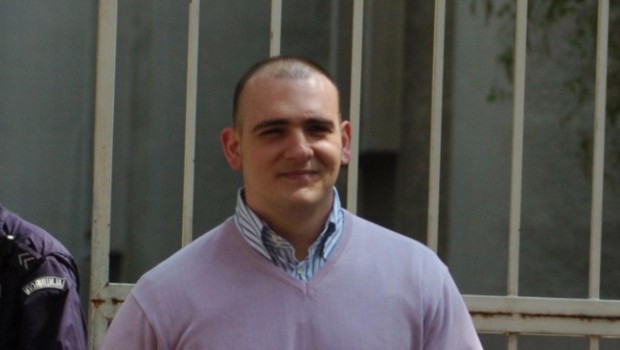




 Duško Šarić, brother of the Montenegrin drug lord
 testified last year that he is an unwitting owner of Lafino Trade LLC.




 Gangster die auch in Montenegro ihre Geldwäsche Hotels und Baufirmen haben:


 Posts


